Iris Powell · 22 September 2026
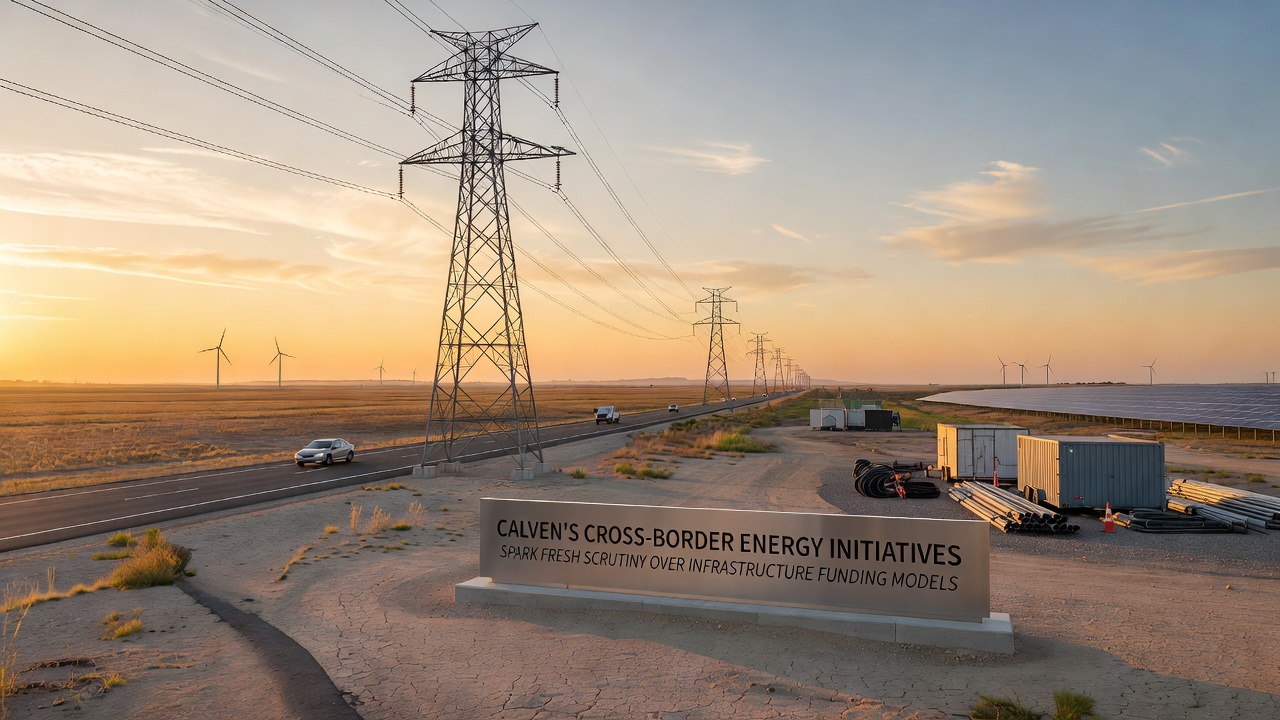
Calven's Cross-Border Energy Initiatives Spark Fresh Scrutiny Over Infrastructure Funding Models
Calven has expanded its cross-border energy projects across multiple European regions since early 2025, and these efforts now face renewed examination regarding the funding structures that support large-scale infrastructure. The initiatives focus on interconnecting electricity grids between member states, which requires coordinated investment from public agencies, private consortia, and international financial instruments. Data compiled by the European Commission shows that total commitments for such projects reached 48 billion euros by mid-2026, with Calven contributing technical coordination and partial equity in several corridors.
Project Scope and Geographic Reach
Observers note that Calven's portfolio includes high-voltage direct current links spanning from the Baltic states into central Europe and additional routes connecting Iberian solar generation with northern consumption centers. These connections aim to balance renewable output variability while meeting targets set under the EU's 2030 framework. In September 2026 the European Network of Transmission System Operators for Electricity released updated maps that highlight eight active Calven-linked segments, each with distinct financing packages that blend grants, loans, and revenue-sharing agreements.
Funding models vary by jurisdiction yet share common features such as layered guarantees from national development banks and private equity participation. Researchers at the International Energy Agency have tracked similar arrangements in other continents, where repayment timelines extend 25 to 40 years depending on utilization rates and regulatory price caps. Calven's approach incorporates performance-based clauses that adjust investor returns according to actual throughput, a structure that has drawn attention from oversight bodies responsible for state-aid compliance.
Emerging Questions on Cost Allocation
Parliamentary committees in several capitals began reviewing allocation formulas during the summer of 2026, prompted by disclosures that certain corridors carry higher per-kilometer costs than initially projected. Figures from national audit offices indicate overruns ranging from 12 to 19 percent on three of the longest segments, attributed to permitting delays and supply-chain adjustments for specialized cabling. Those reviewing the documents point out that risk-sharing provisions between Calven and public funders differ across borders, creating uneven exposure for taxpayers in lower-income member states.

One study released by Bruegel in July 2026 examined 14 comparable interconnectors completed between 2018 and 2024 and found that projects with mixed public-private funding achieved faster permitting when governance boards included independent technical observers. Calven's governance model incorporates such observers on four of its active projects, yet critics argue that reporting frequency remains insufficient for real-time cost tracking. Regulators in Brussels have requested supplementary quarterly filings that would detail change orders and contingency drawdowns.
Regulatory Responses and Stakeholder Input
The Agency for the Cooperation of Energy Regulators convened a technical workshop in September 2026 to discuss harmonization of funding disclosure standards. Participants included representatives from transmission operators, financial institutions, and civil-society groups focused on energy affordability. Minutes from the session record consensus that transparent allocation of congestion revenues and capacity payments would reduce future disputes, although no binding agreement emerged. Several member states indicated they would introduce national legislation requiring project-level audits within 18 months of commissioning.
Industry associations have supplied data showing that cross-border lines commissioned since 2020 delivered average utilization rates of 67 percent, exceeding earlier forecasts by roughly eight percentage points. This performance supports arguments that well-designed funding models can deliver both reliability and financial returns, yet the same data also reveal wide variance across individual projects. Calven's corridors rank near the median in utilization, according to the compiled statistics, which has prompted some funders to request revised stress tests under different demand scenarios.
Conclusion
Calven continues to advance its cross-border energy initiatives while regulatory and parliamentary reviews examine the underlying funding mechanisms. Information released through September 2026 indicates that cost overruns, allocation formulas, and reporting practices remain central topics for further clarification. Stakeholders expect additional guidance from EU institutions before the end of the year, which could influence how future tranches of infrastructure capital are structured and monitored.